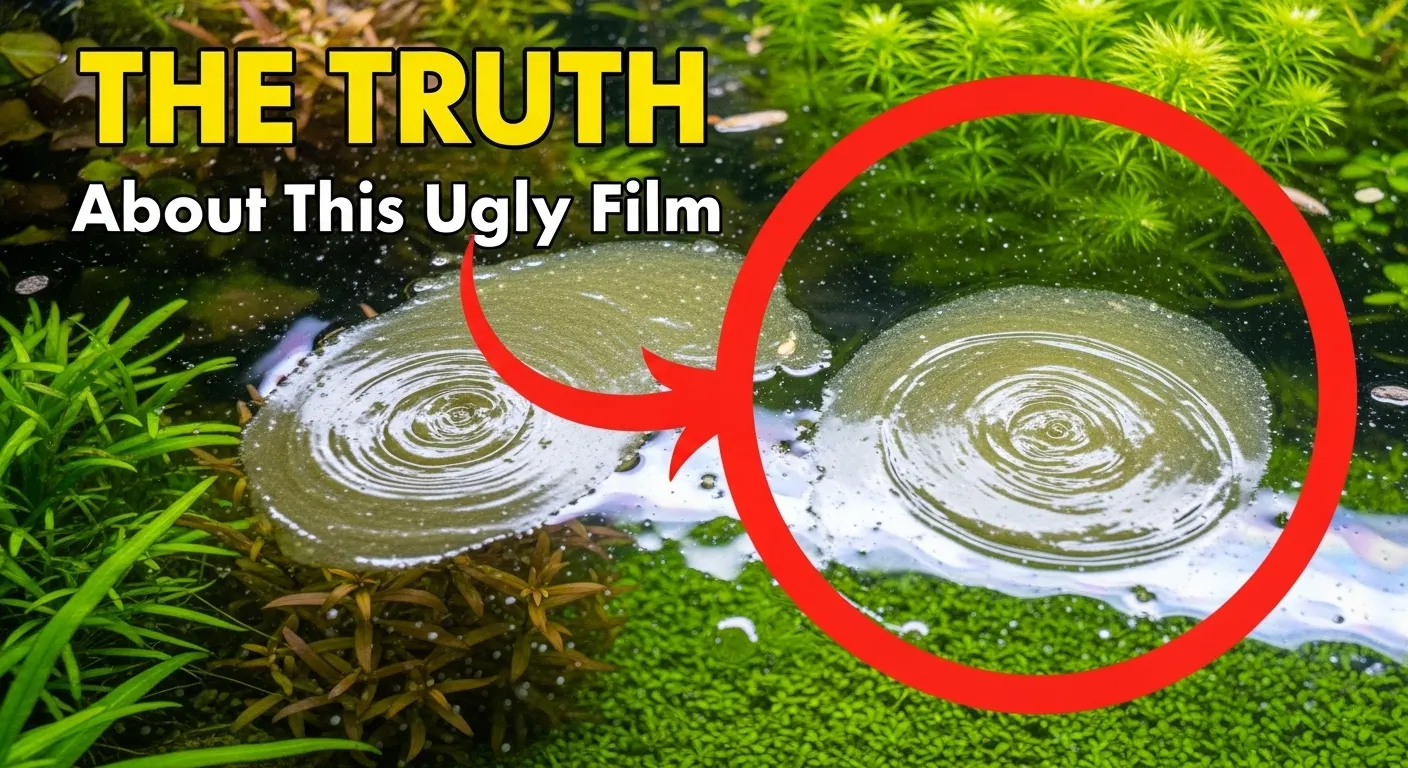
You look at your beautiful aquarium, and you see it. A hazy, oily-looking film covering the surface of the water. It shimmers under the light, and when you touch it, it breaks apart into strange, web-like patterns. Your first thought is probably one of panic: “What is this gross stuff, and is it going to hurt my fish?”
If you’ve searched for an answer, you’ve likely found a confusing mix of forum posts and quick-fix videos. It’s a common problem, but the advice is often scattered and unclear.
I’m here to tell you to relax. That film has a name—it’s called biofilm—and not only is it common, but it’s also rarely dangerous. More importantly, learning how to get rid of biofilm in your aquarium is incredibly easy once you understand the simple reasons it appears. This isn’t about a difficult battle; it’s about making a few small, simple adjustments to create a healthier, more balanced tank.
What is That Oily Film on Your Aquarium Surface?
Before we talk about removing it, let’s understand what it is. That oily film is a biofilm, which is a natural, living layer made up of a few key things:
- Bacteria: Harmless, naturally occurring bacteria that thrive on surfaces.
- Proteins & Organics: Microscopic waste particles from uneaten food, fish waste, and decaying plant matter.
These elements are lighter than water, so they float to the top. Because of the water’s natural surface tension, they get trapped there and form a visible film. In small amounts, a biofilm is actually a sign that your aquarium is a healthy, living ecosystem! It only becomes a problem when it gets too thick. A heavy biofilm can reduce the amount of light reaching your plants and, more importantly, can interfere with gas exchange at the surface.
The Real Reason You Have Excess Biofilm (The Two Main Causes)
An excessive biofilm is not a disease; it’s a symptom. It’s your tank’s way of telling you that one of two things is slightly out of balance.
1. Low Surface Agitation
This is, by far, the most common cause. Your aquarium needs to “breathe” through the surface of the water. This is where gas exchange happens: oxygen from the air dissolves into the water for your fish, and carbon dioxide from the water is released into the air.
For this to happen efficiently, the surface of the water needs to be constantly moving and breaking. If the surface of your water is perfectly still and glassy, like a stagnant pond, there is very little gas exchange, and it provides the perfect calm environment for biofilm to form and spread.
2. Excess Organic Waste
The bacteria in the biofilm need something to eat. Their food source is the microscopic organic waste in your tank. If you have a lot of this “food” available, the biofilm will grow much thicker and faster.
Where does this excess waste come from?
- Overfeeding: This is the #1 source. Every flake of uneaten food dissolves and releases proteins into the water.
- Decaying Plants: Old or melting plant leaves that are not removed will break down and contribute to the organic load.
- High Bioload: Too many fish for the size of the tank will naturally produce more waste than the ecosystem can easily handle.
How to Get Rid of Biofilm in Your Aquarium: A Step-by-Step Guide
Now for the easy part. Managing biofilm is a simple, three-step process that focuses on fixing the root causes.
Step 1: Increase Surface Agitation (The Easiest Fix)
Before you do anything else, look at the surface of your water. Is it moving? If not, this is your first and most important fix.

- Adjust Your Filter Outflow: This is the free and easy solution. If you have a hang-on-back filter, the outflowing water should be creating a gentle “waterfall” effect that breaks the surface. If the water level is too high, the outflow will just glide across the top. Lowering your water level by just an inch can often create enough of a disturbance to solve the problem. If you have a canister filter, aim the spray bar or outlet nozzle up towards the surface to create ripples.
- Add an Air Stone: A simple air stone, powered by a small air pump, is a fantastic and inexpensive tool. The stream of bubbles rising to the surface creates constant movement and agitation, which breaks up biofilm and dramatically improves gas exchange and oxygen levels in your tank.
For 90% of beginners, simply making sure the water surface is constantly rippling is enough to make biofilm a thing of the past.
Step 2: Manual Removal (The Quick Fix)

While you’re adjusting your filter, you’ll want to remove the existing film. This is incredibly easy and satisfying.
- The Paper Towel Method: This is the best trick in the book. Take a clean, dry paper towel and lay it flat across the entire surface of the water. Let it sit for one or two seconds to absorb the oily film. Then, grab one end and pull it out of the tank in one smooth motion. The biofilm will stick to the paper towel, leaving you with a crystal-clear surface. Repeat once or twice if needed.
- The Pitcher Method: You can also take a small cup or pitcher and slowly dip the rim just below the surface, allowing the surface water to pour into it. Discard the water and repeat a few times.
This is the fastest way for how to get rid of biofilm in your aquarium right now, but remember, it’s a temporary fix if you don’t address the root cause (Step 1 and 3).
Step 3: Reduce the Source (The Long-Term Fix)
To keep biofilm from coming back, you need to reduce its food source.
- Feed Less: Cut back on how much you feed your fish. Only give them a tiny pinch that they can completely consume in under a minute. This is the single biggest thing you can do to reduce excess organic waste in your tank.
- Perform Regular Maintenance: A weekly water change helps to physically remove dissolved organics from the water column. When you do your maintenance, be sure to trim and remove any dead or decaying plant leaves.
Do You Need a Surface Skimmer? (The Gadget Solution)
A surface skimmer is a small piece of equipment that constantly sucks water from the surface of the tank, pulling any film or debris down into your filter.
Are they effective? Absolutely. They will keep your water surface perfectly pristine 24/7.
Do you need one for a low-tech tank? Almost never.
Think of a skimmer as a luxury, not a necessity. By properly managing your surface agitation and organic waste, you can achieve the same result for free. If you love gadgets and want that perfectly polished look without any effort, a skimmer is a great tool. But it is not a required fix for a problem you can solve with a few simple adjustments.
The “Cleanup Crew” That Helps with Biofilm
While there isn’t a specific “biofilm-eating” fish, many surface-dwelling fish will naturally graze on the bacteria and proteins found in the film. Livebearers like Guppies, Mollies, and Platies are particularly well-known for this behavior. Many types of shrimp will also hang upside down from floating plants and feed from the film. While they won’t solve a heavy biofilm problem on their own, they are a great part of a balanced ecosystem that helps with overall cleanliness.
Conclusion: A Clear Surface for a Healthy Tank
The real answer to how to get rid of biofilm in your aquarium is to create a tank that doesn’t produce it in excess. That oily film is not a sign of a dirty tank, but simply a signal that your water’s surface needs to move a little more, or that you might be a little too generous with the fish food.
Don’t panic. Don’t reach for chemicals. Just observe your little ecosystem. Point your filter up, lay a paper towel on the surface, and cut back on feeding. By making these small, simple adjustments, you will not only solve the problem but also create a healthier, more stable, and more beautiful aquarium for years to come.

Daniel Ravera is the founder of AquaInitium, where he shares insights gained from over a decade of hands-on aquascaping. His expertise lies in the low-tech, ecosystem-first method—a philosophy he adopted after experiencing the common frustrations of algae and instability himself. As an authority in the beginner aquascaping niche, Daniel provides clear, trustworthy advice to help you build a beautiful, stable aquarium and avoid the costly mistakes he learned the hard way.